Showing posts with label Venda. Show all posts

Monday, March 19, 2018

Hot Nights in the Sand! Northern Slopes of the Soutpansberg 12-15 March 2018.


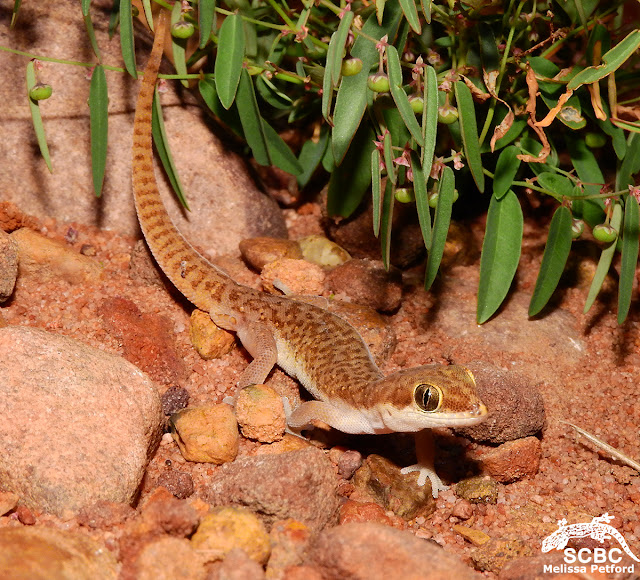
Kalahari Ground Gecko (Pachydactylus wahlbergii). A new species for our list and a new record for the Soutpansberg.
Nice large Horned Adder spotted while walking through a hot dry area.
The Soutpansberg Centre for Biodiversity and Conservation visited the Northern Slopes and Limpopo valley this week for reptile sampling. We visited a new site on a private reserve west of Waterpoort. As it was our first visit we spent our time identifying habitats to sample in, and began exploratory sampling to start building our lists for the reserve. Our aim for this first visit was to cover as much ground as possible and add as many species to the list as we could. In total we ended on 28 species of reptile from 142 individual records, including a few regional rarities and habitat specialists. We predict high diversity and abundance from this site.

Lala Palm thicket on Northern Slopes of Soutpansberg.
Open Savanna Sandveld of the hot northern slopes.
During the period we concentrated our efforts on two very different sandy areas that we identified as unique. The first being Lala Palm Thicket on deep sand, the second important area was Open Savanna Sandveld in a hot valley over the first ridge. Both habitats occur elsewhere on the Soutpansberg, but this is the first time we have sampled such large unbroken areas of these habitat. Other areas that were identified as interesting are the grassy marshy wetland areas and also the hot south facing slopes bordering hot dry sandveld.

Turner's Gecko (Chondrodactylus turneri) most abundant gecko at site.
Juvenile Bushveld Lizard ( Heliobolus lugubris ) most abundant diurnal lizard at site.
Striped Skink (Trachylepis striata). A common and attractive tree dwelling lizard.
Male Rainbow Skink (Trachylepis margaritifer)
Veld Monitor (Varanus albigularus) one of our largest lizard species.
The most common lizards we encountered during our survey were the highly visible and active bushveld lizards (29). Second most abundant was the nocturnal lizard, Turner’s Gecko (27). The third most common lizards encountered were the rock dwelling Rainbow Skinks and tree dwelling Striped Skinks (11 each). 

Peter's Ground Agama (Agama armata) one of two agamas we spotted.
Detail of Kalahari Ground Gecko (Pachydactylus wahlbergii).
Our survey also produced one rarity, the Kalahari Ground Gecko (Pachydatylus wahlbergii). This gecko is common in the Central Kalahari region and there is an isolated population in Limpopo province, with records at Mopane (near Waterpoort) and Langjan. To our knowledge this is the first confirmed record of this species in the Soutpansberg and is a significant range extension.This brings our Soutpansberg Reptile list up to 111 species.
Adult male Speckled Gecko (Pachydactylus punctatus).
Other interesting sightings were locating two species of Pachydactylus gecko (Transvaal Gecko and Speckled Gecko) in sympatry. This is also only the third locality in the Western Soutpansberg where we have found the Speckled Gecko (Pachydactylus punctatus).
A beautifully marked Juvenile Speckled Gecko (Pachydactylus punctatus).
Another surprise find was the the presence of Marsh Terrapins in Arid Sandveld. Three juveniles were seen in rock pools and a larger sub-adult was spotted in a man made drinking trough. Amazing that these aquatic animals have managed to move over hot dry sandy areas to find a suitable place to live.

Juvenile Marsh Terrapin ( Pelomedusa subrufa) found in temporary rock pool.
We were also happy to locate the White-bellied Dwarf Burrowing Skink (Scelotes albiventris) on the deep sand. This is one of our target species we are working on in the Soutpansberg and busy updating distributional data for it. So far we have located them from Blouberg in the West all the way east to Nwanedi. Previously animal was restricted to Langjan area. 

White-bellied Dwarf Burrowing Skink (Scelotes limpopoensis albiventris). A highly restricted Limpopo endemic. Our fourth locality for this species in the Soutpansberg.


We were surprised not to find many snakes during our sample effort although what we did see were interesting. At reserve we saw a Black Mamba, Bibron's Blind Snake, two Boomslang, a Horned adder, Yellow-bellied Sand Snake and Long-tailed Thread Snake. The dry hot weather probably resulted in the limited snake activity.
Female Northern Boomslang (Dispholidus typus viridis)
Bibron's Blind Snake (Afrotyphlops bibronii).
Long-tailed Thread Snake (Myriopholis longicauda)
Juvenile Northern Boomslang (Dispholidus typus viridis)
Scorpions
The Soutpansberg Centre for Biodiversity and Conservation is also working on scorpion diversity and distribution and during our sampling we were lucky enough to locate a new species of scorpion for our list, Parabuthus kuanyamarum. this brings our Soutpansberg Scorpion List up to 26 species.


Parabuthus kuanyamarum a new species for our scorpion list.
Hottentota trilineatus eating solifuge.
Along the way we encountered some other interesting animals on the northern slopes off the sample site. Here are some of the highlights.
Parabuthus granulatus saw three moving around over two nights in hot conditions.
Juvenile Olive Whip Snake (Psammophis mossambicus)
Large Puff Adder (Bitis arietans) hiding under bush.
Very obliging Variable Skink (Trachylepis varia) while photographing it jumped onto my camera and rested on my hand for a moment. These lizards are common, but one of my favorite species.

Very fat and possibly gravid Scolopendra morsitans.

Survey Site Reptile List

Marsh Terrapin (Pelomedusa subrufa)
Leopard Tortoise (Stigmochelys pardalis)
Pienaar’s Flat Gecko (Afroedura pienaari)
Turner’s Gecko (Chondrodactylus turneri)
Common Tropical House Gecko (Hemidactylus mabouia)
Common Dwarf Gecko (Lygodactylus capensis)
Kalahari Ground Gecko (Pachydactylus [Colopus] wahlbergii)
Common Dwarf Gecko (Lygodactylus capensis)
Transvaal Gecko (Pachydactylus affinis)
Speckled Gecko (Pachydactylus punctatus)
Bushveld Lizard (Heliobolus lugubris)
Savanna Lizard (Meroles squamulosus)
Jones’ Girdled Lizard (Cordylus jonesii)
Soutpansberg Flat Lizard (Platysaurus relictus)
Flat Dragon Lizard (Smaug depressus)
Spotted-neck  Snake-Eyed Skink (Panaspis maculicollis)
Rainbow Skink (Trachylepis margaritifer)
Striped Skink (Trachylepis punctatissima)
Variable Skink (Trachylepis varia)
White-bellied Dwarf Burrowing Skink (Scelotes albiventris)
Rock Monitor (Varanus albigularis)
Flap-necked Chameleon (Chameleo dilepis)
Distant’s Ground Agama (Agama aculeata distani)
Peter’s Ground Agama (Agama armata)
Bibron’s Blind Snake (Afrotyphlops bibronii)
Long-tailed Thread Snake (Myriopholis longicauda)
Horned Adder (Bitis caudalis)
Western Yellow-Bellied Sand Snake (Psammophis subtaeniatus)
Black Mamba (Dendroaspis polylepis)
Boomslang (Dispholidus typus)

Big thanks to Mr. Jannie Moolman for allowing access to his beautiful property.

Juvenile Flap-necked Chameleon (Chameleo dilepis) sleeping on a branch.

Saturday, January 13, 2018

Lizard Life: First Half of Summer September 2017- January 2018


A beautiful male Arnold's Velvet Gecko (Homopholis arnoldi) from Blouberg Nature Reserve. Photo Melissa Petford.
The rarely seen Zambezi Giant Blind Snake (Afrothyphlops mucruso), near Waterpoort. Photo Melissa Petford.
The elusive Dwarf Sand Snake (Psammophis angolensis), Goro Game Reserve. Photo Ryan van Huyssteen.
The first half of the season has been very interesting. We have been settling into our new base at Lajuma Research Centre located in the newly proclaimed Luvhondo Private Nature Reserve.  Lajuma, is a high altitude site and boasts the highest peak in the Soutpansberg. The habitat is broadly composed of Afromontane Forest, Soutpansberg Summit Sourveld and Soutpansberg Mountain Bushveld and has exceptionally high biodiversity and high endemnism.
 
Last season the SCBC saw one python. This season we have been seeing a lot. Photo Melissa Petford.

Vine Snakes (Thelotornis capensis) have been very common this season. Photo Ryan van Huyssteen.

Lajuma Gate, Luvhondo Private Nature Reserve. New home of Soutpansberg Centre for Biodiversity and Conservation.
So far the summer has been cool and dry (relatively speaking). Lajuma has received very little rain and reptile activity has been low because of drought conditions. Despite that, our hard work and determination has paid off, and we have found four new reptile species (Lygodactylus bradfieldi; Rhinotyphlops landeli; Pelomedusa galeata (subrufa); Homopholis arnoldi) for our lists, one new frog species (Strongylopus fasciatus) and a new scorpion (Parabuthus granulatus). Currently our scorpion list is at 24 species and our reptile list is sitting on 109. The diversity of the Soutpansberg never fails to amaze us.

Hatchling Marsh Terrapin Pelomedusa galeata (subrufa). Goro Game Reserve. Photo Ryan van Huyssteen.
Bradfield's Dwarf Gecko (Lygodactylus bradfieldi), Goro Game Reserve. Photo Ruan Stander.
Arnold's Velvet Gecko (Homopholius arnoldi) Punda Maria. Photo Melissa Petford.
Male Parabuthus granulatus, Goro Game Reserve. Photo Ryan van Huyssteen.
So far this season has been very exciting and busy off the field. We participated in BirdMap’s Big Bird Day at Blouberg, on 25 November logging  only 106 species in miserably cold and rainy conditions including a new species for the pentad. We also caught up with some of Blouberg’s amazing reptile fauna including one of the most vibrant Arnold’s Velvet Geckos we have ever seen.

Long-tailed Garter Snake (Elapsoidea sunduvallii longicauda) from Blouberg Nature Reserve. Photo Melissa Petford.

Beautiful pale coloured Speke's Hinged Tortoise (Kinixys spekii) found after a shower at Blouberg. Photo Melissa Petford.
Striped Quill-snouted Snake (Xenocalamus bicolor lineatus) Blouberg. Photo Melissa Petford.
The highly restricted Makabeng Dwarf Gecko (Lygodactylus montiscaeruli) from Blouberg.
The SCBC also delivered a talk at Greater Mapungubwe Network and the Vhembe Biosphere Reserve Invasive Species Working Group meeting held on 24 November. Our talk was on Reptile Diversity in the Soutpansberg and we spoke about what drives the high biodiversity in region.

Melissa and Ryan delivering talk at Greater Mapungubwe Network and the Vhembe Biosphere Reserve Invasive Species Working Group meeting. Photo Malou Storm.
Sampling for Flat Lizards high up on an inselberg in the Makabeng. Photo Melissa Petford.
In an effort to remain dynamic, the SCBC has been doing exploratory fieldwork further abroad in the area. First week of January we traveled to the Makabeng Plateau south of Blouberg to see some of Limpopo’s highly endangered lizards, specifically Platysaurus monotropis and Platysaurus inopinus. It was a privilege to see these animals and experience the cultural landscape that is the Makabeng. Sadly the region is threatened by mining and these lizards will be one of the many unique species to disappear if threats continue.

Young male Orange-throated Flat Lizard (Platysaurus monotropis) from Makabeng area. Photo Melissa Petford.
Unexpected Flat Lizard (Platysaurus inopinus) from the Makabeng. Photo Melissa Petford.
The biggest development in the SCBCs forseable future is our current involvement in coordinating the Western Soutpansberg Biodiversity Project in partnership with University of Venda and Lajuma Research Centre. This massive project will sample an area of 68103 ha covering two quarter degree grids (2229CD and 2329AB).

Lajuma Biodiversity Project Study Site. Graphic (c) Norbert Hahn.
The project aims are ambitious and will consist of: GIS mapping of physical environmental factors; creation of detailed vegetation maps; compilation of detailed species checklists for area (all flora and fauna); a list of parasites and pathogens active in region; mathematical models will be created to identify species richness, biodiversity hotspots, and to further our biodiversity and rural development agendas; and genetic analysis will be used to determine the taxonomic status of problematic species or subspecies. We will need a lot of help for this project: watch this space for more details and don’t hesitate to get in touch for more information.

Highlights
It's been a really busy season so far. We have visited many localities and seen a lot of diversity, From the eastern foothills of the Soutpansberg at Punda Maria, all along the hot northern slopes to the cliffs of Blouberg Nature Reserve in the far west; below are some of our highlights:

Leopard Tortoise (Stigmochelys pardalis). Goro Game Reserve. Photo Ryan van Huyssteen.
Nice reddish Speke's Hinged Tortoise (Kinixys spekii) Goro Game Reserve. Photo Ryan van Huyssteen.
Serrated Hinged Terrapin (Pelusios sinuatus) Punda Maria, KNP. Photo Melissa Petford.
Spotted Rock Snake (Lamprohis guttatus), Lajuma. Photo Melissa Petford.
Large female Common Water Snake (Lycodonomorphus rufulus) Lajuma Research Centre, Photo Ryan van Huyssteen.
Large Puff Adder (Bitis arietans). Lajuma Research Centre. Photo Ryan van Huyssteen.
Limpopo's only endemic snake, Soutpansberg Purple Glossed Snake (Amblyodipsas microphthalma nigra), Goro Game Reserve. Photo Ryan van Huyssteen.
A highly agitated Bibron's Stiletto Snake (Atractaspis bibronii). Near Vivo. Photo Melissa Petford.
Southern African Rock Python (Python natalensis) laying in ambush position in small rain filled puddle. Goro Game Reserve. Photo Ryan van Huyssteen.
High altitude and unique colour form of East-African Shovel-Snout (Prosymna stuhlmanni). Lajuma Research Centre. Photo Melissa Petford.
Perhaps the most common snake in the Limpopo Valley, the Stripe-bellied Sand Snake (Psammophis subtaeniatus). Goro Game Reserve. Photo Ryan van Huyssteen.
A harmless Herald Snake(Crotaphopeltis hotamboeia) showing threat display. Vivo. Photo Melissa Petford.
Soutpansberg Purple-glossed Snake (Amblyodipsas microphthalma nigra) Punda Maria, KNP. Photo Melissa Petford.
Common Wolf Snake (Lycophidion capense) from Lajuma Research Centre. Photo Melissa Petford.
Varigated Wolf Snake (Lycophidion variegatum) Sand River. Photo Melissa Petford.
Long-tailed Garter Snake (Elapsoidea sunduvallii longicauda) from Waterpoort. Photo Melissa Petford.

Rhombic Egg-Eater (Dasypeltis scabra) fro Lajuma Research Centre. Photo Melissa Petford.
Eastern Tiger Snake (Telescopus semiannulatus) Sand River. Photo Melissa Petford.
Adult and juvenile White-bellied Dwarf Burrowing Skink (Scelotes albiventris), a highly restricted sand swimmer. Goro Game Reserve. Photo Ryan van Huyssteen.
Limpopo girdled lizard (Cordylus jonesii) from Goro Game Reserve. Photo Ryan van Huyssteen.
The endemic Pienaar's Flat Gecko (Afoedura pienaari) from the Sand River. Photo Melissa Petford.
The highly restricted Stripe-bellied Legless Skink (Acontias kgalagadi subtaeniatus). Goro. Photo Ryan van Huyssteen.
Blue-throated male Orange-throated Plated Lizard (Gerrhosaurus flavigularis). Lajuma Reserach Centre. Photo Melissa Petford.
African Bullfrog (Pyxicephalus edulis) Goro Game Reserve. Photo Ryan van Huyssteen.
Bubbling Kassina (Kassina senegalensis) Lajuma Research Centre. Photo Melissa Petford.
Tremolo Sand Frog (Tomopterna cryptotis) Lajuma Research Centre. Photo Melissa Petford.
Striped Stream Frog (Strongylopus fasciatus) Lajuma Research Centre. Photo Melissa Petford.
Flat-backed Toad (Sclerophrys pusilla) Goro Game Reserve. Photo Ryan van Huyssteen.
Cheloctonis jonesii from high altitude grassland, Lajuma. Photo Ryan van Huyssteen.
Large solifuge eating Giant Sand Cricket (Sia sp.). Goro Game Reserve. Photo Ryan van Huyssteen.
Ethmostigmus trigonopodus, Goro Game Reserve. Photo Ryan van Huyssteen.
Cormocephalus nitidus, Goro Game Reserve. Photo Ryan van Huyssteen.
Big thanks to everyone who made this first half of the season successful and memorable. Notably Francis Burger, Lauren Hale, Jazz Violet, Sterrin Smalbrugge, Craig Napier, Henk Nel, Ruan Stander, Johan Marais, Ashley Kemp, Luke Kemp, Gary Nicoloau, Sina Weier, Jabu and Bibi Linden, Ian Gaigher, Oldrich van Schalkwyk, Richard Pettifor, Hannes and Maritjie Underhay, Alan and Lorna Carr, Tim Hartelt and Sylvie Failletaz: thanks to all of you without your help and support on and off the field our season and project would be poorer.
Common Mole Rat (Cryptomys hottentotus) found crossing the road during a survey. Photo Melissa Petford.