Showing posts with label Gecko. Show all posts

Monday, March 19, 2018

Hot Nights in the Sand! Northern Slopes of the Soutpansberg 12-15 March 2018.


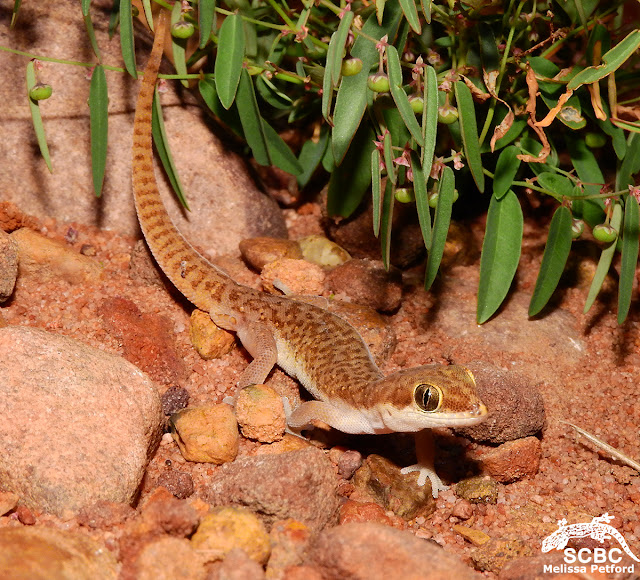
Kalahari Ground Gecko (Pachydactylus wahlbergii). A new species for our list and a new record for the Soutpansberg.
Nice large Horned Adder spotted while walking through a hot dry area.
The Soutpansberg Centre for Biodiversity and Conservation visited the Northern Slopes and Limpopo valley this week for reptile sampling. We visited a new site on a private reserve west of Waterpoort. As it was our first visit we spent our time identifying habitats to sample in, and began exploratory sampling to start building our lists for the reserve. Our aim for this first visit was to cover as much ground as possible and add as many species to the list as we could. In total we ended on 28 species of reptile from 142 individual records, including a few regional rarities and habitat specialists. We predict high diversity and abundance from this site.

Lala Palm thicket on Northern Slopes of Soutpansberg.
Open Savanna Sandveld of the hot northern slopes.
During the period we concentrated our efforts on two very different sandy areas that we identified as unique. The first being Lala Palm Thicket on deep sand, the second important area was Open Savanna Sandveld in a hot valley over the first ridge. Both habitats occur elsewhere on the Soutpansberg, but this is the first time we have sampled such large unbroken areas of these habitat. Other areas that were identified as interesting are the grassy marshy wetland areas and also the hot south facing slopes bordering hot dry sandveld.

Turner's Gecko (Chondrodactylus turneri) most abundant gecko at site.
Juvenile Bushveld Lizard ( Heliobolus lugubris ) most abundant diurnal lizard at site.
Striped Skink (Trachylepis striata). A common and attractive tree dwelling lizard.
Male Rainbow Skink (Trachylepis margaritifer)
Veld Monitor (Varanus albigularus) one of our largest lizard species.
The most common lizards we encountered during our survey were the highly visible and active bushveld lizards (29). Second most abundant was the nocturnal lizard, Turner’s Gecko (27). The third most common lizards encountered were the rock dwelling Rainbow Skinks and tree dwelling Striped Skinks (11 each). 

Peter's Ground Agama (Agama armata) one of two agamas we spotted.
Detail of Kalahari Ground Gecko (Pachydactylus wahlbergii).
Our survey also produced one rarity, the Kalahari Ground Gecko (Pachydatylus wahlbergii). This gecko is common in the Central Kalahari region and there is an isolated population in Limpopo province, with records at Mopane (near Waterpoort) and Langjan. To our knowledge this is the first confirmed record of this species in the Soutpansberg and is a significant range extension.This brings our Soutpansberg Reptile list up to 111 species.
Adult male Speckled Gecko (Pachydactylus punctatus).
Other interesting sightings were locating two species of Pachydactylus gecko (Transvaal Gecko and Speckled Gecko) in sympatry. This is also only the third locality in the Western Soutpansberg where we have found the Speckled Gecko (Pachydactylus punctatus).
A beautifully marked Juvenile Speckled Gecko (Pachydactylus punctatus).
Another surprise find was the the presence of Marsh Terrapins in Arid Sandveld. Three juveniles were seen in rock pools and a larger sub-adult was spotted in a man made drinking trough. Amazing that these aquatic animals have managed to move over hot dry sandy areas to find a suitable place to live.

Juvenile Marsh Terrapin ( Pelomedusa subrufa) found in temporary rock pool.
We were also happy to locate the White-bellied Dwarf Burrowing Skink (Scelotes albiventris) on the deep sand. This is one of our target species we are working on in the Soutpansberg and busy updating distributional data for it. So far we have located them from Blouberg in the West all the way east to Nwanedi. Previously animal was restricted to Langjan area. 

White-bellied Dwarf Burrowing Skink (Scelotes limpopoensis albiventris). A highly restricted Limpopo endemic. Our fourth locality for this species in the Soutpansberg.


We were surprised not to find many snakes during our sample effort although what we did see were interesting. At reserve we saw a Black Mamba, Bibron's Blind Snake, two Boomslang, a Horned adder, Yellow-bellied Sand Snake and Long-tailed Thread Snake. The dry hot weather probably resulted in the limited snake activity.
Female Northern Boomslang (Dispholidus typus viridis)
Bibron's Blind Snake (Afrotyphlops bibronii).
Long-tailed Thread Snake (Myriopholis longicauda)
Juvenile Northern Boomslang (Dispholidus typus viridis)
Scorpions
The Soutpansberg Centre for Biodiversity and Conservation is also working on scorpion diversity and distribution and during our sampling we were lucky enough to locate a new species of scorpion for our list, Parabuthus kuanyamarum. this brings our Soutpansberg Scorpion List up to 26 species.


Parabuthus kuanyamarum a new species for our scorpion list.
Hottentota trilineatus eating solifuge.
Along the way we encountered some other interesting animals on the northern slopes off the sample site. Here are some of the highlights.
Parabuthus granulatus saw three moving around over two nights in hot conditions.
Juvenile Olive Whip Snake (Psammophis mossambicus)
Large Puff Adder (Bitis arietans) hiding under bush.
Very obliging Variable Skink (Trachylepis varia) while photographing it jumped onto my camera and rested on my hand for a moment. These lizards are common, but one of my favorite species.

Very fat and possibly gravid Scolopendra morsitans.

Survey Site Reptile List

Marsh Terrapin (Pelomedusa subrufa)
Leopard Tortoise (Stigmochelys pardalis)
Pienaar’s Flat Gecko (Afroedura pienaari)
Turner’s Gecko (Chondrodactylus turneri)
Common Tropical House Gecko (Hemidactylus mabouia)
Common Dwarf Gecko (Lygodactylus capensis)
Kalahari Ground Gecko (Pachydactylus [Colopus] wahlbergii)
Common Dwarf Gecko (Lygodactylus capensis)
Transvaal Gecko (Pachydactylus affinis)
Speckled Gecko (Pachydactylus punctatus)
Bushveld Lizard (Heliobolus lugubris)
Savanna Lizard (Meroles squamulosus)
Jones’ Girdled Lizard (Cordylus jonesii)
Soutpansberg Flat Lizard (Platysaurus relictus)
Flat Dragon Lizard (Smaug depressus)
Spotted-neck  Snake-Eyed Skink (Panaspis maculicollis)
Rainbow Skink (Trachylepis margaritifer)
Striped Skink (Trachylepis punctatissima)
Variable Skink (Trachylepis varia)
White-bellied Dwarf Burrowing Skink (Scelotes albiventris)
Rock Monitor (Varanus albigularis)
Flap-necked Chameleon (Chameleo dilepis)
Distant’s Ground Agama (Agama aculeata distani)
Peter’s Ground Agama (Agama armata)
Bibron’s Blind Snake (Afrotyphlops bibronii)
Long-tailed Thread Snake (Myriopholis longicauda)
Horned Adder (Bitis caudalis)
Western Yellow-Bellied Sand Snake (Psammophis subtaeniatus)
Black Mamba (Dendroaspis polylepis)
Boomslang (Dispholidus typus)

Big thanks to Mr. Jannie Moolman for allowing access to his beautiful property.

Juvenile Flap-necked Chameleon (Chameleo dilepis) sleeping on a branch.

Wednesday, April 12, 2017

January – April 2017: Lizard Days Serpentine nights!


Jones's Girdled Lizard (Cordylus jonesii), Goro Game Reserve, Western Soutpansberg. Photo Melissa Petford.
Spotted Rock Snake (Lamprophis guttatus) from North of Louis Trichardt. Photo Ryan van Huyssteen.

Reticulated Centipede Eater (Aparallactus lunulatus) found at Medike. Photo Melissa Petford.
Soutpansberg Flat Lizard (Platysaurus relictus) found throughout the western Soutpansberg. Photo Melissa Petford.
A hatchling Flap-necked Chameleon (Chameleo dilepis). We saw hundreds this season. Photo Melissa Petford.
We have had an exceptionally busy late summer period here at the Soutpansberg Centre for Biodiversity and Conservation. With the nice wet weather conditions, life of every type has flourished and with that a boom in reptilian activity. With warm temperatures well into the night we worked on the night shift most of the time. These involved long night walks and regular night drives to locate nocturnal species. This year we have been lucky enough to have traveled widely in the Soutpansberg, but as usual most of our time was spent at sunny Medike. The second half of the wet season produced some exciting new species for our lists: Horned Adder (Bitis caudalis), Snouted cobra (Naja annulifera), Olive Whip Snake (Psammophis mossambicus), Striped Quill Snouted Snake (Xenocalamus bicolor lineatus), Fitzimons' Legless Skink (Acontias fitzsimonsi) and a new frog Northern Pygmy toad (Poyntonophrynus fenoulheti).

Medike at the height of the wet season. Photo Melissa Petford.

Heavy rains north of the Soutpansberg. Perfect conditions for doing night drives. Photo Melissa Petford.
Bibron's Stiletto Snake (Atractaspis bibronii) in defensive posture. Photo Melissa Petford.
The rare Muller's Velvet Gecko (Homopholis arnoldi) found near Waterpoort. Photo Melissa Pertford.
Jordy Koedam with a large Black File Snake (Gonionotophis nyassae) found crossing the road near Waterpoort.
Long-tailed Garter Snake (Elapsoidea sundevallii longicauda) from near Waterpoort. Photo Melissa Petford.
Large Puff Adder (Bitis arietans) at Medike. Photo Melissa Petford.
Colour variation in population of Cape Geckos (Pachydactylus capensis). Photos Melissa Petford.
A beautiful Brown House Snake (Boedon capensis) Medike. Photo Melissa Petford.
Female Peter's Ground Agama (Agama armata) with a hole she dug to deposit her eggs. Photo Ryan van Huyssteen. 
View of Sand River at Medike. Photo Melissa Petford.
Chirindia langi occidentalis from Medike. Photo Melissa Petford.
Large Giant Plated Lizard (Matobosaurus validus) Medike. Photo Melissa Petford.
Juvenile Giant Plated Lizard (Matobosaurus validus), Medike. Photo Melissa Petford.

Sebastian Stroud with orphaned Lesser Bushbaby that the SCBC is currently rehabilitating.

This summer SCBC was joined by UK environmentalist Sebastian Stroud who participated in the SCBCs reptile programme for two months in the field. Sebastian’s strong fieldwork sensibility, willingness to learn, untiring enthusiasm and baffling sense of humour made for an exciting two months. Thanks for your participation Seb, the SCBC will certainly be left a better project with your input. Other field contributors to the project this summer were Colbert Mufamadi from South Africa, Jordy Koedam from Netherlands, Lisa Hoyer Germany, and Jaide Vidafar from Australia – thanks to you all for your help.

Mapangubwe

Free roaming Elephants near Mapangubwe National Park.
A beautiful Horned Adder (Bitis caudalis) found near the Limpopo River. Photo Melissa Petford.
Our first destination this year was to visit the Limpopo river near Mapangubwe National Park. This is still a truly wild region. We saw Elephants on the side of the road, heard hyaenas calling nearly every night and one night while photographing a snake we could hear the distant roar of lions. In the area we mainly sampled at night and found a few new species for our lists, the most notable being Horned Adder, Quill Snouted Snake, Garter Snakes a new frog Guinea Shovel Nosed and finally we caught up with the Limpopo Parabuthus granulatus – Southern Africa’s most dangerous scorpion.

Long-tailed Garter Snake (Elapsoidea sundevallii longicauda) from near Mapangubwe. Photo Melissa Petford.
Guinea shovelnose frog (Hemisus guineensis) from near Mapangubwe. Photo Ryan van Huyssteen.
Striped Quill-snouted Snake (Xenocalamus bicolor lineatus). Near Mapangubwe. Photo Melissa Petford.

 Lajuma


A remote valley near Lajuma peak.
 A massive Common Purple-glossed Snake (Amblyodipsas polylepis polylepis) found at Lajuma. Photo Melissa Petford.

The SCBC is lucky enough to be able to visit Lajuma and surrounding properties in the newly proclaimed Luvhondo Nature Reserve on a regular basis. This summer our work at Lajuma has resulted in a new species for the property list (Common Purple Glossed Snake) and a deeper understanding of the reptile communities on the mountain. Melissa Petford, SCBC Programme Coordinator, is currently engaged with her Masters Degree on rupicolus species and the ecology of two endemic dwarf geckos (watch this space for more details). 

Cryptic Dwarf Gecko (Lygodactylus incognitus) Lajuma. Photo Melissa Petford.
An interesting colour variation of East African Shovel-snout from Lajuma (Prosymna stuhlmanni).
Cregoi's Blind Legless Skink (Acontias cregoi) from Bergplaats, Soutpansberg. Photo Melissa Petford.
 

Goro

Open Savanna Woodland at Goro Game Reserve, the deep sand creates perfect conditions for high biodiversity.
The SCBC spent an extremely productive week at Goro Game reserve on the Northern slopes, we were sampling for fossorial species. It was here that we located Jones’s Girdled Lizard, Zygaspis and confirmation that Scelotes albiventris and Scelotes limpopoensis co-occur in the Soutpansberg. We have also begun to experiment with different sampling techniques; including randomised digging, drift net and funnel trap arrays and we have also begun experimentation for arboreal drift fence and funnel trap arrays. Highlights for Goro were a new locality and QDG for Lygodactylus soutpansbergensis. Very strange to see them on the blistering hot northern slopes.

SCBC team setting up drift fence with funnel traps at Goro.
Kalahari Dwarf Worm Lizard (Zygaspis quadrifrons). Photo Ryan van Huyssteen.
A heavily gravid Flap-necked Chameleon (Chameleo dilepis). Photo Melissa Petford.


A juvenile Bushveld Lizard (Heliobolus lugubris) mimicking a Carabidae beetle. Photo Melissa Petford.
Peter's Ground Agama (Agama armata). Photo Melissa Petford.
Bushveld Rainfrog (Breviceps adspersus adspersus). Photo Melissa Petford.
Black File Snake ( (Gonionotophis nyassae) from Goro. Photo Melissa Petford.
Black-headed Centipede Eater (Aparallactus capensis). Photo Melissa Petford.
Common Water Snake (Lycodonomorphus rufulus) Goro. Photo Melissa Petford.
Transvaal Gecko (Pachydactylus affinis), Goro. Photo Melissa Petford.
The endemic Soutpansberg Purple-glossed Snake (Amblyodipsas microphthalma nigra) Goro. Photo Melissa Petford.

Punda Maria, Kruger National Park 

The SCBC made time to travel to the far South-eastern Soutpansberg to try our luck at Punda Maria in the Kruger National Park. Here we did very well and besides seeing all the mega-fauna we found an interesting little lizard call Acontias fitzsimonsi. The individual we found was melanistic and very difficult to identify. We also found a new scorpion for the area, Pseudolychas pegleri. Looking forward to sampling this area again in the coming months.

Fitzimons' Legless Skink (Acontias fitzsimonsi?), Punda Maria, Kruger National Park. Photo Melissa Petford.
Striped Skink (Trachylepis striata), Punda Maria. Kruger National Park.
Common Rough-scaled Lizard (Meroles squamulosa), Punda Maria. Photo Melissa Petford.
Holub's Sandveld Lizard (Nucras holubi), near Punda Maria Kruger National Park. Photo Ryan van Huyssteen.

Golwe-Vhurivhuri and Gundani

Miombo Woodland at Gundani (Brachystegia spiciformis) a unique environment. Photo Ryan van Huyssteen.
Eastern Soutpansberg is a largely unexplored area comprised of rural villages, forested valleys, wooded sandstone hillsides asnd home to South Africas only patch of Brachystegia (Miombo woodland) at Gundani. We spent a day at Gundani in the forest and located a new locality for Chirindia langi langi. In the coming months we will explore this largely under-surveyed area.

Lang's Worm Lizard (Chirindia langi langi) from Gundani. Photo Ryan van Huyssteen.
Transvaal Gecko (Pachydactylus affinis), Golwe. Photo Ryan van Huyssteen.
Juvenile Pachydactylus affinis, Golwe. Photo Ryan van Huyssteen.

Pafuri and Surrounds

Mopane woodland at Pafuri. One of the many habitats in the area. Photo Melissa Petford.
Luvhuvhu River at Pafuri. Home to the elusive Limpopo Forest Cobra. Photo Melissa Petford.

Possibly the most tropical region in Limpopo, the Pafuri area of the far north-eastern Soutpansberg is a biodiversity hotspot with very different biogeographic regions colliding: bringing together a wealth of different species including eastern tropical forms. It is here along the rivers that the Limpopo Forest Cobra has been seen skulking in the thick tangles, a species the SCBC is trying hard to study. Our visit to Pafuri was really productive this summer. We found more localities for Chirindia langi langi which is adding to further knowledge of these largely unknown and secretive burrowing lizards.

Chirindia langi langi from Masisi area. Photo Ryan van Huyssteen.
Rock Monitor (Varanus albigularis) in a tree at Pafuri. Photo Melissa Petford.
The crepuscular Sunduvall's Writhing Skink ( Mochlus sundevalli). Photo Ryan van Huyssteen.

Scorpions

Finding the Limpopo Parabuthus granulatus was the scorp highlight for the period. These scorpions are wide ranging in the hot dry regions of Southern Africa and come into Limpopo in the far north region. The scorpion’s venom has the highest Lethal Dose value of anhy Southern African scorpion with an LD value of 1.56mg/kg the second most venomous, Parabuthus transvaalicus has an LD value of 4.25mg/kg. Over the next few months we will be doing even more work on the scorpions of the Soutpansberg. Watch this space for more details!
Parabuthus granulatus near Mapangubwe. Note lack of hair on tail and small telson. Photo Ryan van Huyssteen.
Parabuthus traansvaalicus from near Mapangubwe. Note hairy tail and large telson. Photo Ryan van Huyssteen.
Uroplectes planimanus with babies, Pafuri. Photo Ryan van Huyssteen.
Uroplectes olivaceus from the Luvhondo Private Nature Reserve. Photo Ryan van Huyssteen.
A premolt Parabuthus mossambicensis from Goro Game Reserve. Photo Ryan van  Huyssteen.
Uroplectes carinatus Goro Game Reserve. Photo Ryan van  Huyssteen.
Hadogenes soutpansbergensis with first instar scorplings, Lajuma. Photo Ryan van Huyssteen.

Male Hadogenes soutpansbergensis Goro Game Reserve. Photo Ryan van  Huyssteen.