Showing posts with label Soutpansberg endemic. Show all posts

Saturday, July 13, 2019

Summer 2019 (January to May) Tortoises, Flat Lizards and One Lucky Pangolin

A rescued African Ground Pangolin (Smutsia temnickii) busy feeding on cocktail ants. Photo Melissa Petford.
It’s been a long period since our last blog post and we have been very active this summer. As usual, most of our time was spent at Medike Nature Reserve, but we have also visited other regions, most notably Kruger National Park, Mapungubwe National Park, Makabeng Plateau, eastern Soutpansberg, Alldays Region and some new sites in the western Soutpansberg. Besides our fieldwork we also were involved in a pangolin rescue and maybe the most exciting development of all was Melissa finally submitting her PhD entitled Ecology and Conservation of Restricted Reptiles, which focused on the endemic and rupicolous reptile species of the Soutpansberg. Below we share some of our highlights and interesting observations.

Orange cliffs of Medike, the effect is created when the sun is low and lights up orange lichen growing on cliffs.
Testudines

Our year got off to an exciting start and the SCBC hosted two researchers, Melita Vamberger and Flora Ihlow, who were looking at Kinixys and Pelomedusa throughout the north eastern parts of the country. We assisted them in the Soutpansberg region and saw and learned a lot about Testudines: a very interesting and diverse group of reptile. This is the first time we have specifically gone into the field looking for tortoises and they are actually difficult animals to target, especially Kinixys which normally occur in low densities.
Juvenile Hinged Tortoise (Kinixys spp.) from the northern Slopes of the Soutpansberg.
Adult Kinixys from the top of the Soutpansberg.
Adult Kinixys spekki from the Limpopo Valley.
Juvenile Kinixys speki from the Sand River.
Hatchling Kinixys spekki from the Sand River.
Marsh Terrapin (Pelomedusa subrufa) near the Limpopo River.
Helmeted Terrapin (Pelomedusa) from near Polokwane.
Serrated Hinged Terrapin (Pelusios sinuatus), Soutpansberg.
Leopard Tortoise (Stigmochelys pardalis) feeding on lion scat, Mapaungubwe National Park.

Kruger National Park and Mapangubwe National Park
Kruger National Park was one of our destinations during the summer and we were lucky to visit after some heavy summer rains. Pans had formed in many areas that are normally dry and we were lucky to see some of the exciting herpetofauna that Kruger National Park exhibits.  Besides the reptiles we also had some amazing bird and mammal sightings.  The most exciting being an unusual Nyala which had retained female colouration but grown horns. This is apparently caused by some kind of hormonal imbalance – a very unusual animal.

Aberrent Nyala Bull (Tragelaphus angasii), Punda Maria, Kruger National Park.
A difficult reptile to see due to it's retiring nature Rough-scaled Plated Lizard (Broadleysaurus major), Punda Maria, KNP.
Soutpansberg Purple-Glossed Snake (Amblyodipsas microphthalma nigra) the Soutpansberg's and only endemic snake. Punda Maria, KNP.
We also did a few trips to Mapangubwe National Park throughout this period and one weekend in particular was exceptional for birding, we recorded 167 species in a three days visit. Some highlights of the trip were seeing thousands of Muller’s Platanna (Xenopus muelleri) congregating at the edge of the Manoutswa pan, a Martial Eagle Eating a Rock Monitor, a new reptile for our list: Boulenger's Garter Snake (Elapsoidea boulengeri) and finally a rare bird, the Slaty Egret which we spotted in a small pan. Thanks to Richard Petifor for making it such a successful trip.
Martial Eagle (Polemaetus bellicosus) consuming a Rock Monitor (Varanus albigularis).
Thousands of juvenile Muller’s Platanna (Xenopus muelleri) gathering along edge of Manoutswa Pan,
Mapungubwe NP.
Slaty Egret (Egretta vinaceigula) at Mapungubwe National Park.
Nile Monitor (Varanus niloticus) basking at Mapungubwe National Park.
Woodland Kingfisher (Halcyon senegalensis) preying on Southern Foam Nest Frog (Chiromantis xerampelina).
Platysaurus

Another mentionable highlight was an outing was to see the Platysaurus species of an area just south of Blouberg. We found three species living in very close proximity to one another, this is quite a special situation as there can’t be too many places in Southern Africa where one can see that many Platysaurus in easy walking distance.
Dwarf Flat Lizard (Platysaurus guttatus) this species is incredibly shy and difficult to approach. Blouberg Region.
Waterberg Flat Lizard (Platysaurus minor), Blouberg Region.
Orange-throated Flat Lizard (Platysaurus monotropis), Blouberg Region.
 Other Platysaurus we have seen this season were Soutpansberg Flat Lizard (Platysaurus relictus), Blouberg Flat Lizard (Platysaurus parvus), Wilhelm's Flat Lizard (Platysaurus wilhelmi), Zimbabwe Flat Lizard (Platysaurus rhodesianus) and Sekhukhune Flat Lizard (Platysaurus orientalis).
Wilhelm's Flat Lizard (Platysaurus wilhelmi).
Blouberg Flat Lizard (Platysaurus parvus), Blouberg Nature Reserve.
Soutpansberg Flat Lizard (Platysaurus relictus), Soutpansberg.
Sekhukhune Flat Lizard (Platysaurus orientalis) Blyde River Canyon.
Zimbabwe Flat Lizard (Platysaurus rhodesianus)
Surveys
During this period we undertook two notable surveys in new areas of the Soutpansberg. Our first survey was at the farms Leek and Surprise, located roughly south-east of Medike. We recorded 31 reptile species from the property, the most significant of these were five endemic Soutpansberg reptiles: Soutpansberg Worm Lizard (Chirindia langi occidentalis), Soutpansberg Flat Lizard (Platysaurus relictus), Soutpansberg Rock Lizard (Vhembelacerta rupicola), Cryptic Dwarf Gecko (Lygodactylus incognitus) and Soutpansberg Dwarf Gecko (Lygodactylus soutpansbergensis). The abundance of L. incognitus, L. soutpansbergenis, P. relictus and V. rupicola indicates that the property is an important location for the conservation of these species.
Spotted Sandveld Lizard (Nucras intertexta)
Soutpansberg Dwarf Gecko (Lygodactylus soutpansbergensis)
Flat Dragon Lizard (Smaug depressus), an iconic species of the Soutpansberg.

Soutpansberg Worm Lizard (Chirindia langi occidentalis), an important high altitude record.
Bibron's Blind Snake (Afrotyphlops bibronii) locally common invertebrate eater.
In addition to the endemics we also found a new locality of Spotted Rock Snake (Lamprophis guttatus) and a new species for our records: Broadley’s Flat Gecko (Afroedura broadleyi).
Spotted Rock Snake (Lamprophis guttatus), a difficult to see crack dweller.
Broadley's Flat Gecko (Afroedura broadleyi) the first specimen for our lists.
 Another notable survey was a visit to a reserve near Tshipise where we conducted a site visit to assess the practicalities for further surveys on the property. We recorded 15 species and our highlights include the most westerly Soutpansberg records for Stevenson’s Dwarf Gecko (Lygodactylus soutpansbergensis) and a good easterly record of Black Lined Plated Lizard (Gerrhosaurus intermedius), we don't have many localities in the region for this secretive species. We look forward to surveying the property again in the future.

Svenson's Dwarf Gecko (Lygodactylus stevensoni) hiding in plain site on a tree.
Black-lined Plated Lizard (Gerrhosaurus intermedius) a lizard not often encountered.
Eastern form of Pienaar's Flat Gecko (Afroedura pienaari)
Speckled Gecko (Pachydactylus punctatus).
This period also produced many general biodiversity highlights. The most interesting were seeing a live African Hedgehog (Atelerix frontalis) in the Soutpansberg for the first time. Saving an African Ground Pangolin (Smutsia temminckii) from people trying to smuggle it into illicit trade (animal was rehabiltated and is now part of a African Pangolin Working Group programme which will reintroduce Pangolins into Northern KZN where they have become expatriated). Witnissing a Rock monitor (Varanus albigularis) predating on a hatchling Hinged Tortoise (Kinixys spekii). Observing a large Whalberg’s Velvet Gecko (Homopholis wahlbergii) consuming a Tropical House Gecko (Hemidactylus mabouia). Capturing a White-backed Night Heron (Gorsachius leuconotus) on camera trap and finding a Slaty Egret (Egretta vinaceigula) at Mapangubwe. 
African Ground Pangolin (Smutsia temminckii) photo Melissa Petford.


White-backed Night Heron (Gorsachius leuconotus)
Whalberg's Velvet Gecko (Homopholis wahlbergii) and Tropical House Gecko (Hemidactylus mabouia)
Watched this Rock Monitor (Varanus albigularis) digging out a Hinged Tortoise (Kinixys spekii).


Summer 2019 has been exceptional and we have seen so much, encountered so many species, met some amazing people and accomplished so much over the years. The coming summer will see us continuing our surveys by targeting gaps in our survey effort, tying up loose ends and continuing our collaborations we have built over the years. Watch this space for our final blog post at the end of the year.


African Hedgehog (Atelerix frontalis) photo Melissa Petford.


Monday, March 19, 2018

Hot Nights in the Sand! Northern Slopes of the Soutpansberg 12-15 March 2018.


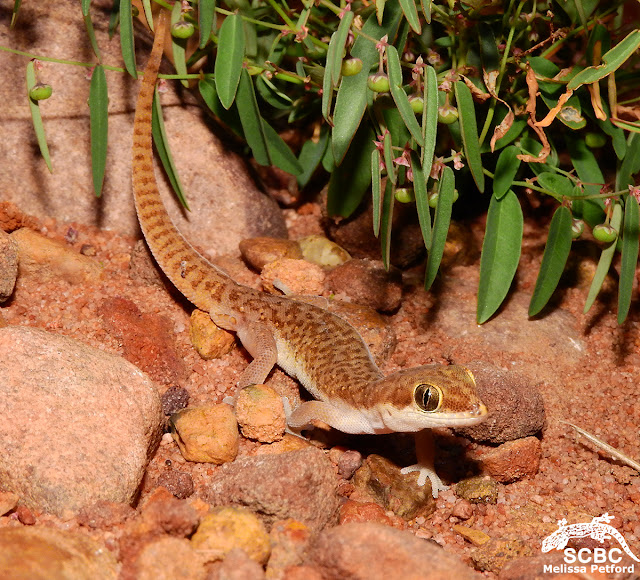
Kalahari Ground Gecko (Pachydactylus wahlbergii). A new species for our list and a new record for the Soutpansberg.
Nice large Horned Adder spotted while walking through a hot dry area.
The Soutpansberg Centre for Biodiversity and Conservation visited the Northern Slopes and Limpopo valley this week for reptile sampling. We visited a new site on a private reserve west of Waterpoort. As it was our first visit we spent our time identifying habitats to sample in, and began exploratory sampling to start building our lists for the reserve. Our aim for this first visit was to cover as much ground as possible and add as many species to the list as we could. In total we ended on 28 species of reptile from 142 individual records, including a few regional rarities and habitat specialists. We predict high diversity and abundance from this site.

Lala Palm thicket on Northern Slopes of Soutpansberg.
Open Savanna Sandveld of the hot northern slopes.
During the period we concentrated our efforts on two very different sandy areas that we identified as unique. The first being Lala Palm Thicket on deep sand, the second important area was Open Savanna Sandveld in a hot valley over the first ridge. Both habitats occur elsewhere on the Soutpansberg, but this is the first time we have sampled such large unbroken areas of these habitat. Other areas that were identified as interesting are the grassy marshy wetland areas and also the hot south facing slopes bordering hot dry sandveld.

Turner's Gecko (Chondrodactylus turneri) most abundant gecko at site.
Juvenile Bushveld Lizard ( Heliobolus lugubris ) most abundant diurnal lizard at site.
Striped Skink (Trachylepis striata). A common and attractive tree dwelling lizard.
Male Rainbow Skink (Trachylepis margaritifer)
Veld Monitor (Varanus albigularus) one of our largest lizard species.
The most common lizards we encountered during our survey were the highly visible and active bushveld lizards (29). Second most abundant was the nocturnal lizard, Turner’s Gecko (27). The third most common lizards encountered were the rock dwelling Rainbow Skinks and tree dwelling Striped Skinks (11 each). 

Peter's Ground Agama (Agama armata) one of two agamas we spotted.
Detail of Kalahari Ground Gecko (Pachydactylus wahlbergii).
Our survey also produced one rarity, the Kalahari Ground Gecko (Pachydatylus wahlbergii). This gecko is common in the Central Kalahari region and there is an isolated population in Limpopo province, with records at Mopane (near Waterpoort) and Langjan. To our knowledge this is the first confirmed record of this species in the Soutpansberg and is a significant range extension.This brings our Soutpansberg Reptile list up to 111 species.
Adult male Speckled Gecko (Pachydactylus punctatus).
Other interesting sightings were locating two species of Pachydactylus gecko (Transvaal Gecko and Speckled Gecko) in sympatry. This is also only the third locality in the Western Soutpansberg where we have found the Speckled Gecko (Pachydactylus punctatus).
A beautifully marked Juvenile Speckled Gecko (Pachydactylus punctatus).
Another surprise find was the the presence of Marsh Terrapins in Arid Sandveld. Three juveniles were seen in rock pools and a larger sub-adult was spotted in a man made drinking trough. Amazing that these aquatic animals have managed to move over hot dry sandy areas to find a suitable place to live.

Juvenile Marsh Terrapin ( Pelomedusa subrufa) found in temporary rock pool.
We were also happy to locate the White-bellied Dwarf Burrowing Skink (Scelotes albiventris) on the deep sand. This is one of our target species we are working on in the Soutpansberg and busy updating distributional data for it. So far we have located them from Blouberg in the West all the way east to Nwanedi. Previously animal was restricted to Langjan area. 

White-bellied Dwarf Burrowing Skink (Scelotes limpopoensis albiventris). A highly restricted Limpopo endemic. Our fourth locality for this species in the Soutpansberg.


We were surprised not to find many snakes during our sample effort although what we did see were interesting. At reserve we saw a Black Mamba, Bibron's Blind Snake, two Boomslang, a Horned adder, Yellow-bellied Sand Snake and Long-tailed Thread Snake. The dry hot weather probably resulted in the limited snake activity.
Female Northern Boomslang (Dispholidus typus viridis)
Bibron's Blind Snake (Afrotyphlops bibronii).
Long-tailed Thread Snake (Myriopholis longicauda)
Juvenile Northern Boomslang (Dispholidus typus viridis)
Scorpions
The Soutpansberg Centre for Biodiversity and Conservation is also working on scorpion diversity and distribution and during our sampling we were lucky enough to locate a new species of scorpion for our list, Parabuthus kuanyamarum. this brings our Soutpansberg Scorpion List up to 26 species.


Parabuthus kuanyamarum a new species for our scorpion list.
Hottentota trilineatus eating solifuge.
Along the way we encountered some other interesting animals on the northern slopes off the sample site. Here are some of the highlights.
Parabuthus granulatus saw three moving around over two nights in hot conditions.
Juvenile Olive Whip Snake (Psammophis mossambicus)
Large Puff Adder (Bitis arietans) hiding under bush.
Very obliging Variable Skink (Trachylepis varia) while photographing it jumped onto my camera and rested on my hand for a moment. These lizards are common, but one of my favorite species.

Very fat and possibly gravid Scolopendra morsitans.

Survey Site Reptile List

Marsh Terrapin (Pelomedusa subrufa)
Leopard Tortoise (Stigmochelys pardalis)
Pienaar’s Flat Gecko (Afroedura pienaari)
Turner’s Gecko (Chondrodactylus turneri)
Common Tropical House Gecko (Hemidactylus mabouia)
Common Dwarf Gecko (Lygodactylus capensis)
Kalahari Ground Gecko (Pachydactylus [Colopus] wahlbergii)
Common Dwarf Gecko (Lygodactylus capensis)
Transvaal Gecko (Pachydactylus affinis)
Speckled Gecko (Pachydactylus punctatus)
Bushveld Lizard (Heliobolus lugubris)
Savanna Lizard (Meroles squamulosus)
Jones’ Girdled Lizard (Cordylus jonesii)
Soutpansberg Flat Lizard (Platysaurus relictus)
Flat Dragon Lizard (Smaug depressus)
Spotted-neck  Snake-Eyed Skink (Panaspis maculicollis)
Rainbow Skink (Trachylepis margaritifer)
Striped Skink (Trachylepis punctatissima)
Variable Skink (Trachylepis varia)
White-bellied Dwarf Burrowing Skink (Scelotes albiventris)
Rock Monitor (Varanus albigularis)
Flap-necked Chameleon (Chameleo dilepis)
Distant’s Ground Agama (Agama aculeata distani)
Peter’s Ground Agama (Agama armata)
Bibron’s Blind Snake (Afrotyphlops bibronii)
Long-tailed Thread Snake (Myriopholis longicauda)
Horned Adder (Bitis caudalis)
Western Yellow-Bellied Sand Snake (Psammophis subtaeniatus)
Black Mamba (Dendroaspis polylepis)
Boomslang (Dispholidus typus)

Big thanks to Mr. Jannie Moolman for allowing access to his beautiful property.

Juvenile Flap-necked Chameleon (Chameleo dilepis) sleeping on a branch.