|
| Sunset over Medike. |
This two-month period was very busy and more productive than
we could have hoped for. Our species lists grew very nicely with many new
reptiles, two frogs, a new mammal and some new birds. The SCBC was fortunate
enough to have two volunteers participate on the programme. Laura Burton from
Norfolk in the UK gave eight weeks to the SCBC. Laura who is pursuing a career
in wildlife policy and legislation is interested in herpetology, specifically testudinoidea.
Then we had Ruan Stander from Polokwane, South Africa who gave just under two
weeks of his time. Ruan is an avid herpetologist with a bright future ahead of
him. Thanks to both of you for your hard work and company in the field without
you this period would not have been as productive.
 |
| Ruan Stander from Polokwane with his Eastern Tiger Snake. |
 |
| Laura Burton from Norfolk, England, with her Black File Snake. |
October and November of this year was characterised by
extremely dry and hot weather, the prevailing el Niño kept the rains away. We
experienced numerous heat waves, some days the temperature rose to the
mid-forties. Due to the heat we worked a lot at night, doing night hikes on a
near daily bases. This led to a spike in our reptile species list with a
majority of new species being nocturnal. Continuing our ‘broadening horizons’
programme we also did weekly road-cruising drives around the western
Soutpansberg and a few forays into Eastern Soutpansberg and Northern Limpopo
(Namely Golwe-Vhurivhuri, Pafuri and Mapungubwe). These new activities have led
to some exciting sightings and interesting species.
For the two-month period we found six new reptile species on
the Medike property alone and the total of new species for our list during this
period for the greater Soutpansberg area was eleven (an additional two species
can be added for the greater Limpopo area). Amphibians one new species for Medike
and a total of two new species for the area. Scorpions one new species for the
area. Birds we found four new species on Medike (we are not doing a greater
Soutpansberg list as birds are very well documented in the area. We also have a
new mammal record, an aardvark caught on camera trap by Medike resident Alan
Carr.
 |
| Black File Snake, Gonionotophis nyassae. A beautiful and strange snake. A new species for our lists. |
 |
| A rare encounter: leopard, Panthera pardus, on foot. A definite highlight for me. |
Highlights for the period was seeing a Black File snake for
the first time. These snakes are strange, the exude a sweet smell which is very
strong and part of this docile animals defence. The body is triangular with beautiful
rough scales jutting out from the skin giving the snake a beaded feel. This has
been one of the most magical reptilian encounters I have experienced. The
second highlight for me was seeing a leopard on foot for the first time. We
just set out on our night walk and saw some eye-shine, immediately one could
see that this was not the usual night animal we regularly encounter. The animal
continued to move in our direction and soon we could se the profile and spots.
It was the big tom we have been capturing on our trap over the past few months.
The leopard continued to move in our direction and at some point the animal sat
down about thirty metres away and watched us. We stood and watched the leopard
while he sat and watched us for about fifteen minutes. Then we moved away and
backed out of the sighting. Leaving the cat there undisturbed. This was
definitely one of the most magical encounters with an animal I have ever had. A
rare meeting that I will never forget.
 |
| Xanthic Van Son's Gecko, Pachydactylus vansoni, photo credit Melissa Petford. |
 |
| Van Son's Gecko, Pachydactylus vansoni, the normal colour phase in the area. |
 |
| Pachydactylus punctatus, A new species for our lists. |
 |
| Lygodactylus stevensoni, Mapungubwe National Park, photo credit Melissa Petford. A new species for our lists. |
 |
| Lygodactylus bradfieldi, Mapangubwe National Park, photo credit Melissa Petford. A new species for our lists. |
 |
| Unidentified species of Lygodactylus. Lajuma. |
 |
| Lygodactylus capensis capensis. |
 |
| Common Barking Gecko, Ptenopus garrulus garrulus, New species for our lists. |
 |
| Lined Shovel Snout, Prosymna lineata, this specimen was found dead on the road. New species for our lists. |
 |
| Herald Snake, Crotaphopeltis hotamboeia, a new species for our lists. |
 |
| Eastern Tiger Snake, Telescopus semiannulatus semiannulatus, another new species for our list. |
 |
| Variegated Wolf Snake, Lychophidion variegatum, photo credit Melissa Petford. A new species for our lists. |
 |
| Dead Duerden's Stilleto Snake, Atractaspis duerdeni, a new species for our Soutpansberg list. |
 |
| East African Shovel Snout, Prosymna stuhlmannii, a new record for our lists. |
 |
| The Vine Snake, Thelotornis capensis capensis, a new species for our list. Photo Melissa Petford. |
 |
| Vine Snake, Thelotornis capensis capensis, perfectly camouflaged in its environment. |
 |
| Common Rough-scaled Lizard, Ichnotropis squamulosa, a new species for our list. |
 |
| Common Flat Lizard, Platysaurus intermedius intermedius, a new species for our Soutpansberg list. |
 |
| Boomslang, Dispholidus typus, Pafuri. |
 |
| Southern Foam Nest Frog, Chiromantis xerampelina, a new frog for our lists. |
 |
| Phrynobatrachus natalensis, a new frog for our lists. |
 |
A beautiful Painted Reed Frog, Hyperolius marmoratus taeniatus, Golwe-Vhurivhuri.
|
 |
| Eastern Olive Toad, Amietophrynus garmani, the most commonly seen frog at Medike. |
 |
| Puff Adder, Bitis arietans arietans, one of the most common snakes in the area. |
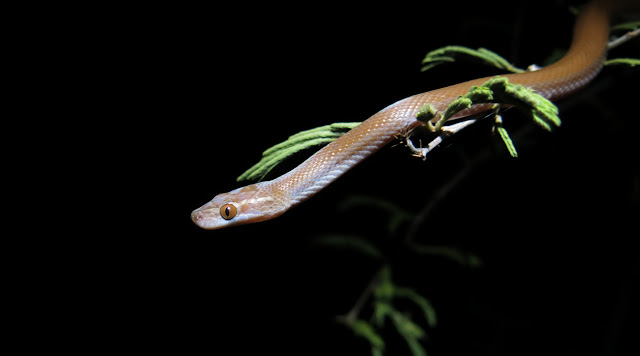 |
Brown House Snake, Boaedon capensis, a very common nocturnal species.
|
 |
| The Soutpansberg Rock Lizard, Vhembelacerta rupicola, a Soutpansberg endemic. |
 |
| Afroedura pienaari, a Soutpansberg endemic |
 |
| Dwarf Mongoose, regular characters at Medike. |
 |
| African Elephants enjoying some water at Pafuri, Kruger National Park. |
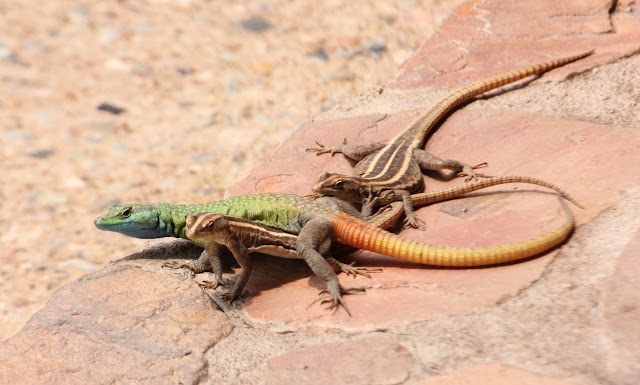 |
| Zimbabwe Flat Lizard, Platysaurus intermedius rhodesianus, Mapangubwe National Park. |
 |
| Rock Monitor, Varanus albigularis, Mapangubwe National Park. |
 |
| Plains Zebras at Pafuri, Kruger National Park. |
Reptile List
Astrix denotes new species.
Kinixys spekii
Crocodylus niloticus
Afroedura pienaari
Chondrodactylus turneri
Hemidactylus mabouia
Homopholis wahlbergii
*Lygodactylus bradfieldi
Lygodactylus capensis capensis
*Lygodactylus stevensoni
*Pachydactylus punctatus
Pachydactylus vansoni
*Ptenopus garrulus garrulus
Chirindia langi occidentalis
Heliobolus lugubris
*Ichnotropis squamulosa
Vhembelacerta rupicola
Smaug warreni depressus
*Platysaurus intermedius intermedius
Platysaurus intermedius rhodesianus
Platysaurus relictus
Broadleysaurus major
Gerrhosaurus flavigularis
Matobosaurus validus
Afroablepharus maculicollis
Mochlus sundevallii sundevallii
Scelotes limpopoensis
Trachylepis margaritifer
Trachylepis striata
Trachylepis varia
Varanus albigularis albigularis
Varanus niloticus
Chamaeleo dilepis dilepis
Agama armata
Leptotyphlops scutifrons scutifrons
Myriopholis longicauda
Afrotyphlops bibronii
Python natalensis
Bitis arietans arietans
Aparallactus capensis
Amblyodipsas microphthalma nigra
*Atractaspis duerdeni
Atractaspis bibronii
*Lychophidon variegatum
Boaedon capensis
*Prosymna lineata
*Prosymna stuhlmannii
Psammophis subtaeniatus
Naja mossambica
*Thelotornis capensis capensis
Dispholidus typus
*Telescopus semiannulatus semiannulatus
*Crotaphopeltis hotamboeia
Philothamnus semivariegatus
*Gonionotophis nyassae